This updated 2026 edition examines the psychology of money with a practical focus on the decisions, risks, and evidence that matter now. The aim is to move beyond a headline or fashionable idea and give readers a framework they can apply.
The essential idea
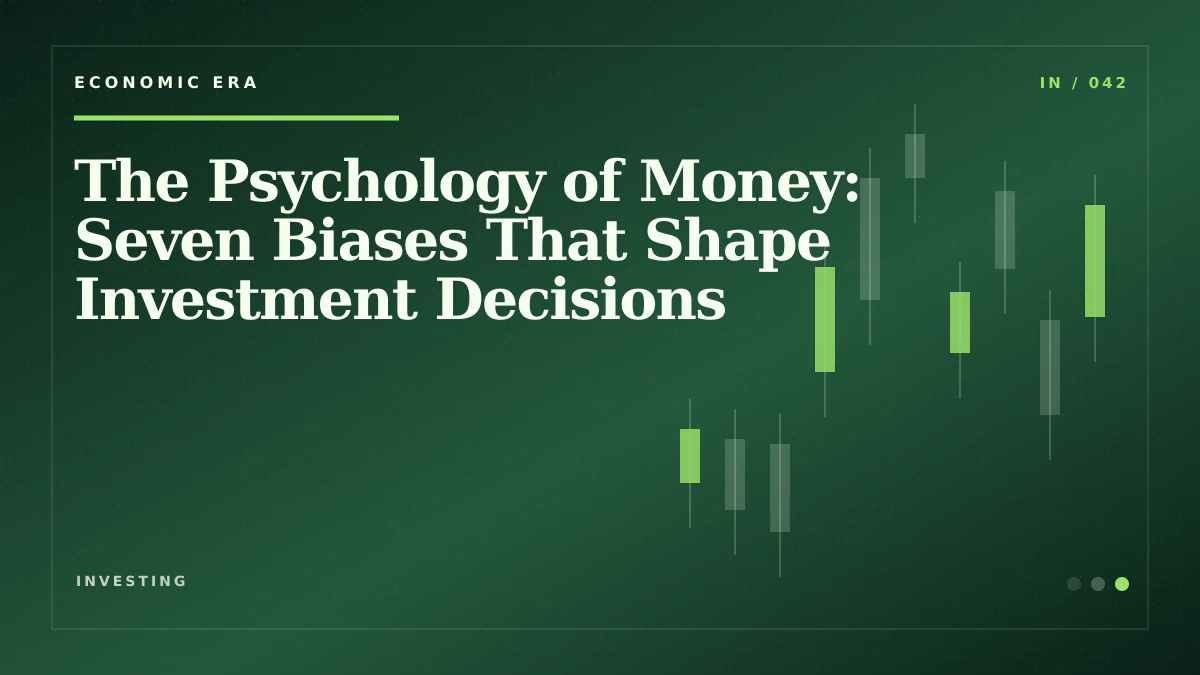
Why do smart people make terrible financial decisions? The answer lies not in math, but in biology. Our brains evolved to survive on the savannah, not to trade derivatives on the stock market.
The Pain of Loss (Loss Aversion). Psychologically, the pain of losing $1,000 is twice as intense as the pleasure of gaining $1,000. This bias causes investors to sell winning stocks too early (to secure a win) and hold losing stocks too long (hoping to avoid the pain of realizing a loss). .
In the age of social media finance, "Herd Mentality" is amplified. When an asset creates a buzz (the "Fear Of Missing Out" or FOMO), critical thinking shuts down. We saw this in the meme-stock crazes of the past.
The deep thinker knows that when the shoe shiner gives stock tips, the market is overheated. . Mastering money requires mastering oneself. An excel spreadsheet can calculate returns, but it cannot calculate the panic you feel during a market crash.
The successful investor is not the one with the highest IQ, but the one with the best emotional discipline.
Why this matters in 2026
For investors in 2026, the useful question is not whether a theme sounds compelling but how it fits a goal, time horizon, valuation, and risk budget. Diversification, liquidity, fees, and disciplined review remain more durable than prediction. Nothing in this article is individualized financial advice.
Practical takeaways
Start with goals, horizon, liquidity, and maximum tolerable loss.
Compare valuation and risk instead of chasing recent performance.
Diversify and review the thesis with predefined rules.
Final perspective
The value of this subject lies in disciplined application. Readers should define the objective, test assumptions, compare alternatives, and review outcomes as conditions change. Good economic and business decisions are rarely based on one forecast; they are built from evidence, explicit trade-offs, and a process that can survive uncertainty.