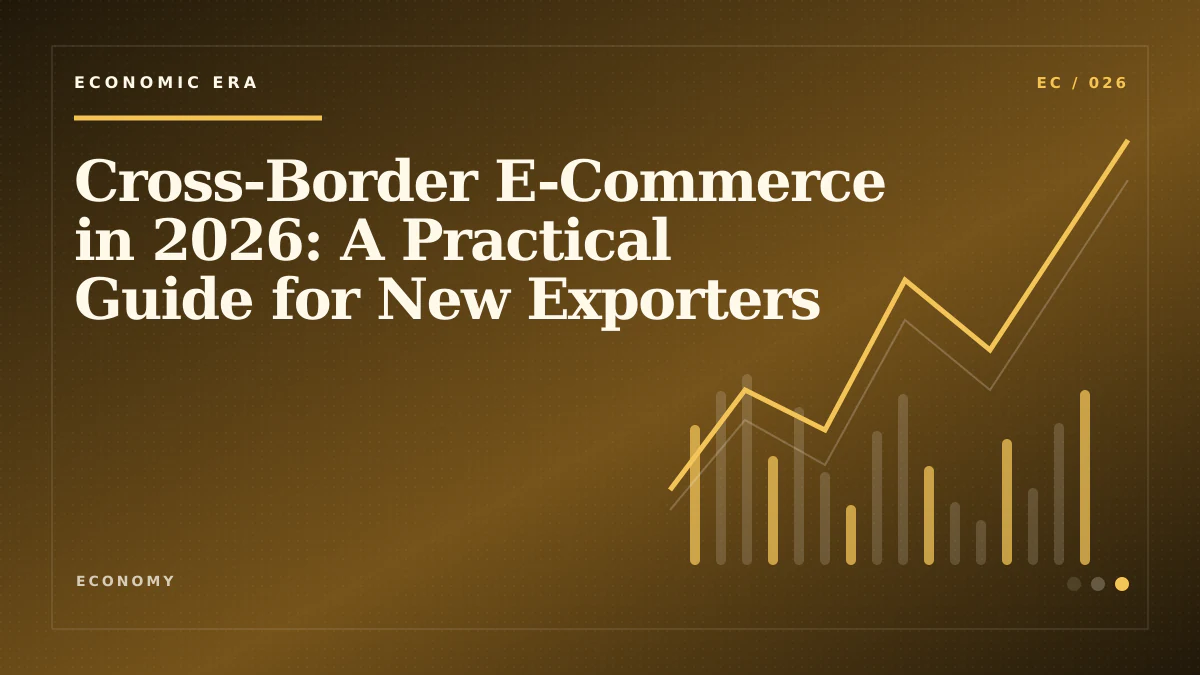
This updated 2026 edition examines cross-border e-commerce in 2026 with a practical focus on the decisions, risks, and evidence that matter now. The aim is to move beyond a headline or fashionable idea and give readers a framework they can apply.
The essential idea
The internet has flattened the world, but logistics has made it bumpy again. The era of "dropshipping junk" is over; the era of Brand Sovereignty and Localized Logistics has begun. . The "Amazon Effect" on Global Expectations.
Consumers in Riyadh, New York, and Tokyo now expect the same thing: instant gratification. The secret to cross-border success isn't just a good website; it's positioning inventory . Utilizing third-party logistics (3PL) hubs in target countries allows small exporters to offer "Next Day Delivery" globally. .
Localization Goes Beyond Language. It is not enough to translate your website. You must translate the experience .
Payment methods vary wildly—what works in the US (Credit Cards) fails in parts of the Middle East (where Buy Now, Pay Later or local wallets dominate). . For new exporters, the key is data. Use digital tools to identify demand pockets before shipping products.
We are moving from a "Push" supply chain (make, then sell) to a "Pull" supply chain (detect demand, then fulfill). The world is your customer, but only if you can navigate the "last mile" to their doorstep.
Why this matters in 2026
The 2026 perspective requires more than following a single headline indicator. Growth, inflation, labor markets, trade, currencies, and public policy interact differently across countries. Readers should compare several signals, separate short-term noise from structural change, and remain explicit about uncertainty.
Practical takeaways
Use several indicators rather than one headline number.
Separate cyclical movements from long-term structural change.
Build scenarios and state what evidence would change the conclusion.
Final perspective
The value of this subject lies in disciplined application. Readers should define the objective, test assumptions, compare alternatives, and review outcomes as conditions change. Good economic and business decisions are rarely based on one forecast; they are built from evidence, explicit trade-offs, and a process that can survive uncertainty.